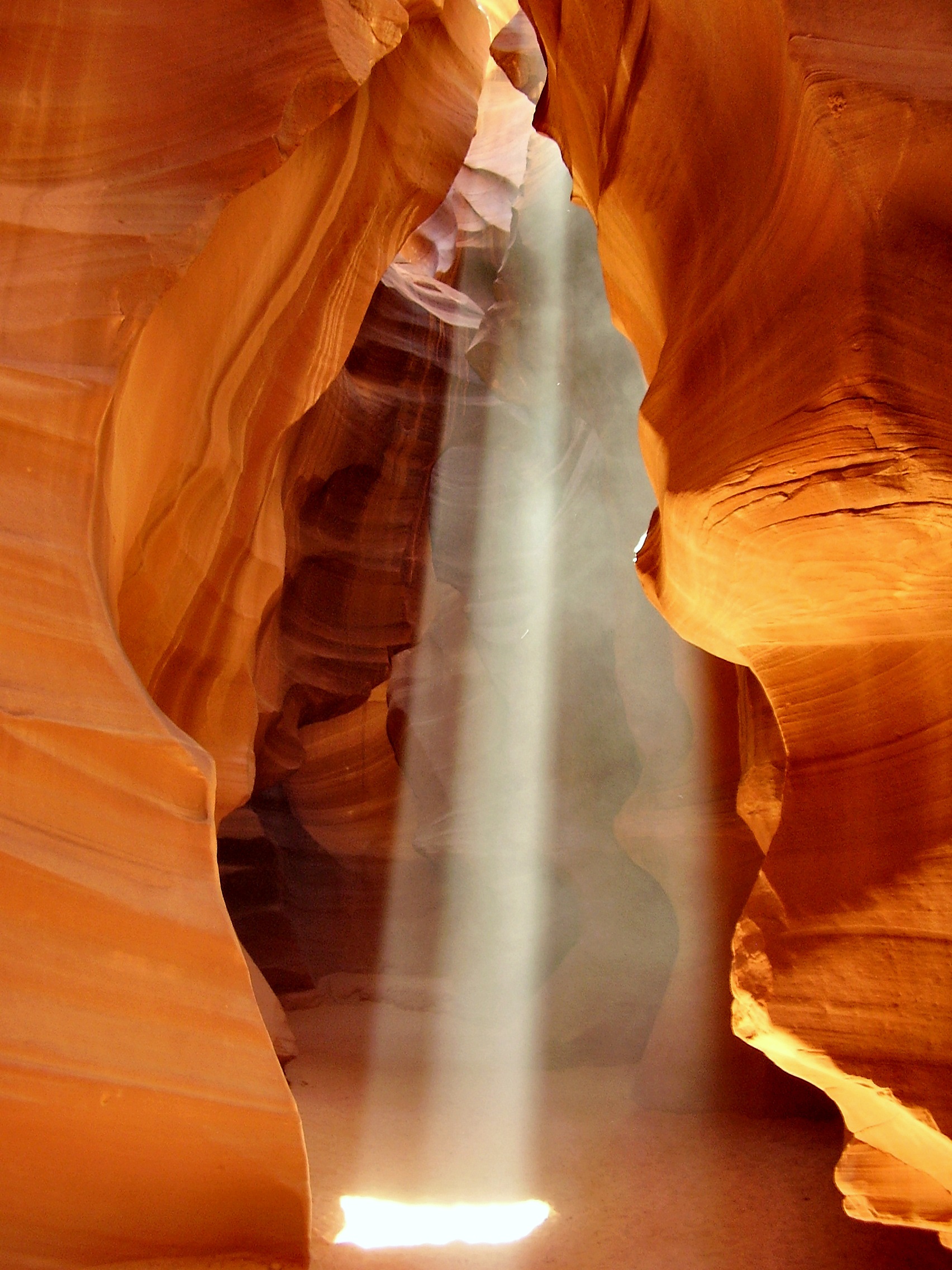
Lower Antelope Canyon in the morning light
From the surface, Antelope Canyon is a crack in the desert you could step over. From inside, it is the most beautiful room I have ever stood in — a corridor of stone poured like water and frozen mid-swirl.
You cannot just walk in
Antelope Canyon sits on Navajo land outside Page, Arizona, and entry is by guided tour only. That is not a tourist trap; it is memory. In August 1997 a flash flood swept through the lower canyon and killed eleven hikers. The canyon has one way in and, for most of its length, no way up. Tours close whenever there is rain anywhere in the drainage — our guide checked the weather board twice before we descended, on a morning without a cloud in the sky.
There are two canyons. Upper Antelope is flat, wide, and famous for the shafts of light that fall to its floor around midday in summer. Lower Antelope is longer, narrower, and more of an adventure: you enter down a stairway bolted into a crack and climb a series of ladders as the canyon pinches and widens. We chose Lower, on the advice of a ranger in Page who said it was "the same rock with a third of the people." She was right.
What it is like down there
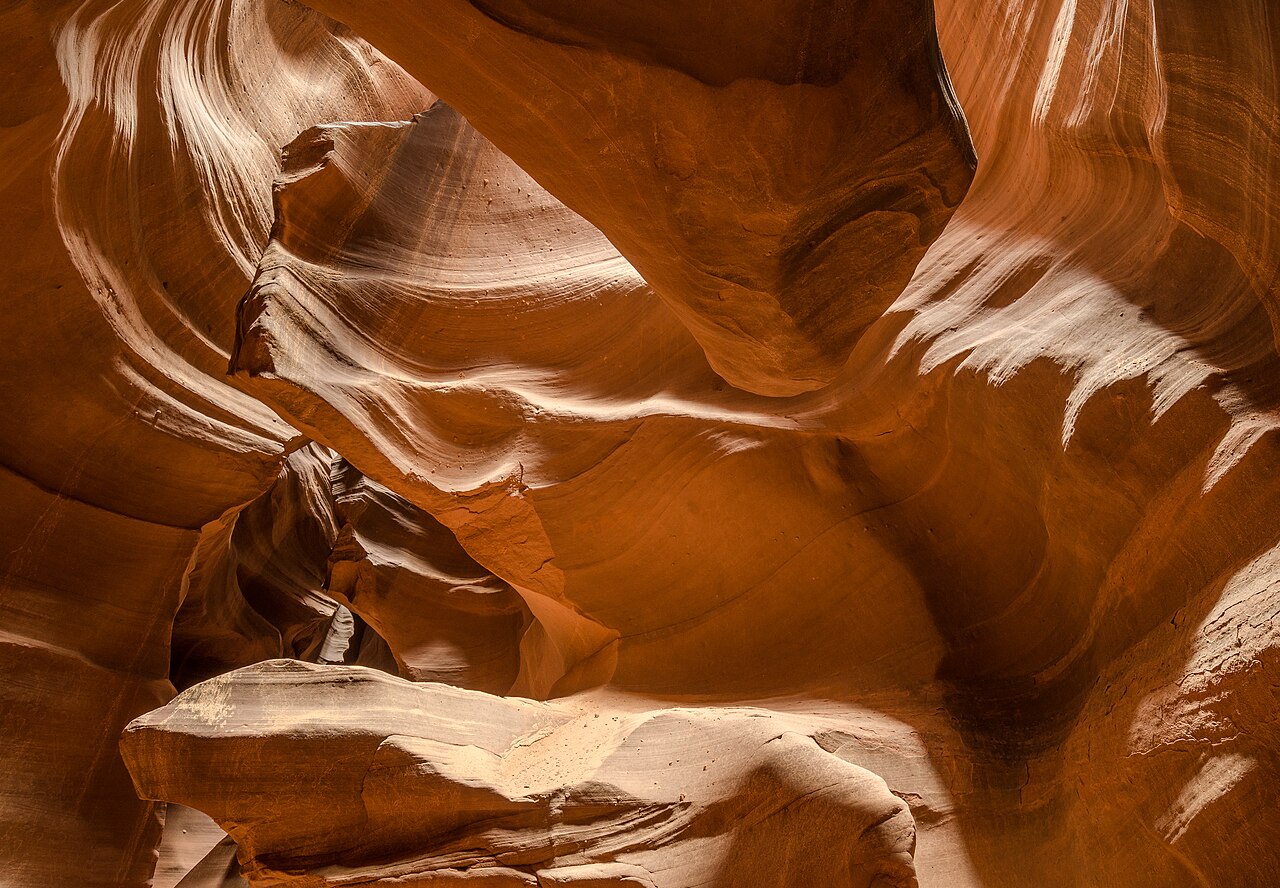
The walls are Navajo sandstone, but that word undersells them. They are carved into waves, flutes and frozen whirlpools in every shade from apricot to oxblood, and the light changes the colour of a wall as you watch. Where the canyon narrows to shoulder width, the stone is polished smooth by centuries of floodwater carrying sand.
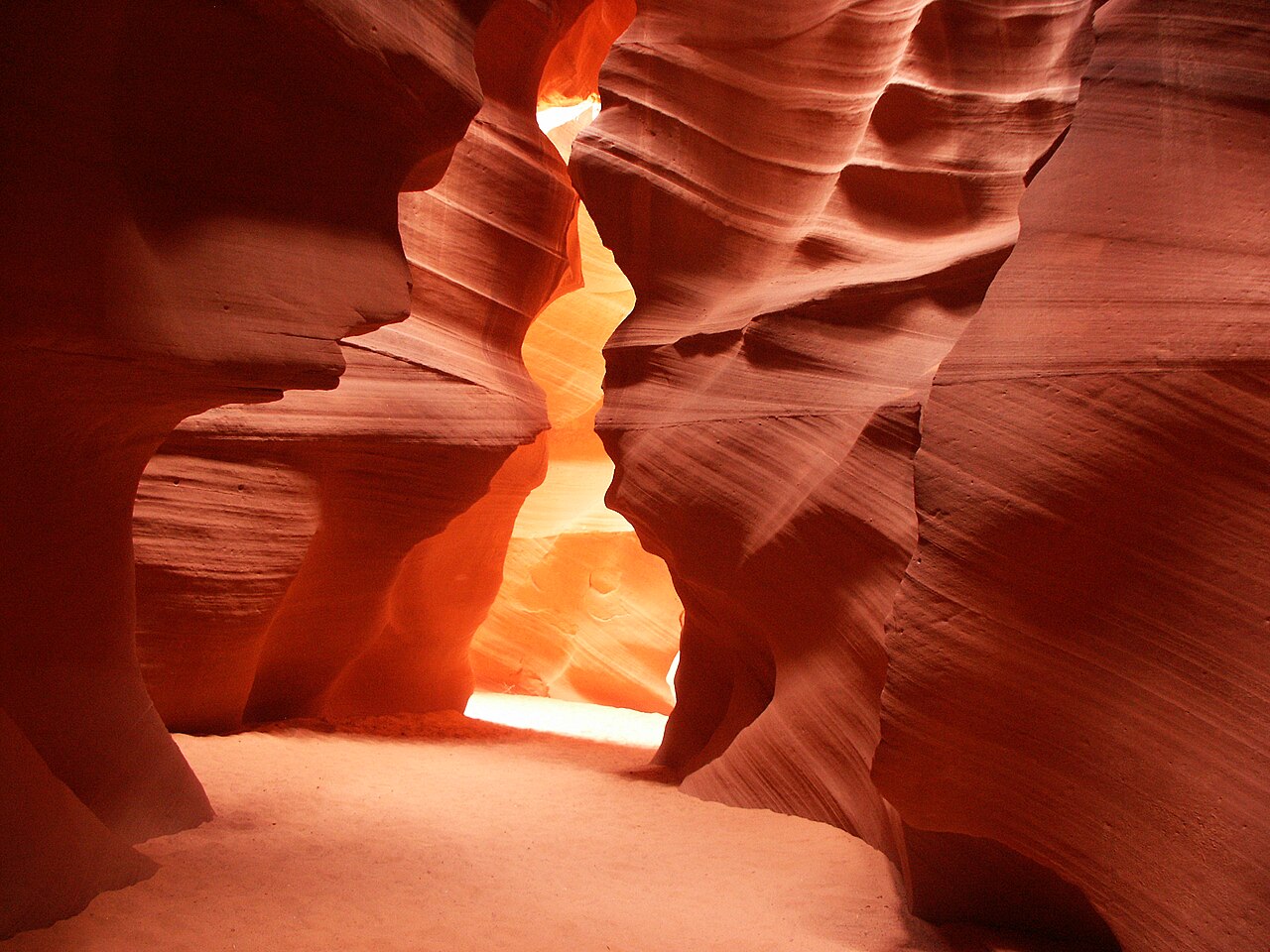
Our guide, Daniel, had grown up in Page and ran the tour like a photography walk with better stories. He pointed out the shapes everyone photographs — a lion's head, a seahorse, a smiling shark — and told us which bend collects the mid-morning light. He also tossed a handful of sand into a light shaft to show how the famous "beams" in everyone's photos are helped along. Knowing that did not spoil it. The beams are real; the dust just makes them visible.
Booking, timing, and the crowds
Tours sell out days ahead in spring and summer — book before you book anything else in Page. For Lower Canyon I would take the 8:15 or 9:00 a.m. departure: the light is angled and soft, the canyon is cool, and the groups are smaller. By noon it is beautiful too, but you will share every bend with three other groups and a great deal of echoing.
Practical notes
Bags: no backpacks or tripods on regular tours; a phone or camera in hand is fine.
Shoes: closed shoes with grip. The ladders are steep and the sandy floor shifts.
Weather: if your tour is cancelled for flood risk, accept it gracefully and
rebook. The rule exists for the best of reasons.
Afterwards: Horseshoe Bend is ten minutes away — we went the next evening
(that story is here).